
I love my sweet sister, Joyce. Truly, she has blessed my life for over two years with her intentional actions. She visited me at the old Smyrna shop, visited at this Boro location, met me for dinners at various places and has consistently valued me enough to designate and set apart time for our fellowship. She has also given me beautiful cards; a pocket stone cross I took to Italy and other thoughtful gestures, like cooking dinner for my family.
For over two years, she has been a prayer warrior and a true friend to me.
Given her work at the food bank and SNAP benefits cut since October 1, she has certainly been busier than usual the past six weeks. Today, I had the blessing of driving to the Boro to meet her for breakfast!
I just realized my “focus on ONE God story” was not a completely new one. I shared the gist of the Lamentations 3:58 story via text two weeks ago.
Still, Joyce listened as if she had never heard a peep! God bless her, she is such an active listener. Granted, I did add some new details, as the Lord tends to keep adding to each story He gives me.
As fun as it is to share stories, I love listening to others’ stories. I asked Joyce what was in her ear as a new lesson. She opened her phone and shared this verse from 1 Chronicles.
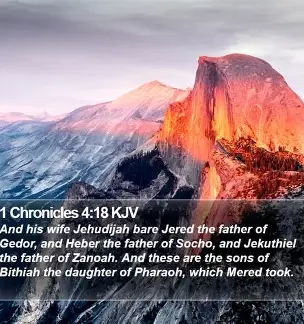
Joyce shared a certain nudge she felt reading the genealogy. Essentially, questions about why a second born son would be the one married to the daughter of Pharaoh. Why was this particular wife, Bithiah, mentioned by name?
I love, love, LOVE deep diving into scripture and gaining any type of new understanding. It always feels like Jesus is hugging me or love-tapping me on the shoulder. Today was extra exciting for me, as I have recently studied some things about birth order and how God names certain people. It always excites me to recognize when He has taken me through certain steps to prepare me for anything. I was especially excited that He prepared me a pinch for Joyce’s question.
In biblical genealogies, firstborns often represent inheritance and authority, but second sons frequently carry spiritual significance — chosen by God for covenant purposes rather than birth order. Abel was chosen over Cain, Jacob over Esau and Ephraim over Manasseh.
When a second son connects to foreign or royal lineage, like Pharaoh’s daughter here, it often points to divine reversal, covenant inclusion or a bridging of nations.
What makes Pharaoh’s daughter, Bithiah, so special? For starters, her Hebrew name is Bat-Yah and literally means “daughter of Yahweh.” To me, it’s clear she renounced Egypt’s gods and embraced Israel’s God, Yahweh. Jewish tradition today still gives every convert to Judaism a Hebrew name. The most common names according to one source are those which are connected to new beginnings, redemption and listening. Choosing Bat-Yah or being guided to choose a common name for her conversion both lead to a clear understanding of her renouncing her Egyptian and pagan values
From Seminary Now, The Five Women Who Saved Moses ” Then the fifth woman entered the scene: Pharaoh’s daughter. This person of wealth and influence saw the little ark and asked her attendants to bring it to her. The baby slave boy was crying, and she had compassion on him.”
According to Jewish tradition (Midrash and Targum Jonathan), she is actually the same woman who rescued baby Moses from the Nile. I believe it’s important to note that the Bible does not confirm it is the same woman. However, if that’s true, then her marriage into Israel through Mered (a descendant of Judah) symbolizes redemption — an Egyptian princess becoming part of God’s covenant people.
To that end, it’s really cool to me that this is the name she chose. She married Mered aka ” rebel” from the line of Ezra, which means “helper”. This Ezra is not the prophet/scribe who returned from Babylon. It’s so cool to me that a daughter of Yah married a rebel who became a helper…it’s like redemption is folded directly into the genealogy.
This is where my spazzing over Hebrew adds multiple hours to studying any one topic. Why? Because it didn’t make sense to my spirit for a true daughter of Yah to marry a rebel. Well, the Jewish Midrash (Yalkut Shimoni 166, Megillah 13a) says Mered was another name for Caleb, the faithful spy who didn’t rebel against God (Numbers 14:24) So what did he rebel against? Well, the Midrash states he “rebelled against the counsel of the spies”. He rebelled against rebellion!
This little insight flips the meaning on it’s head. Mered’s rebellion was a form of righteousness and expression of the moral courage to stand against sin.
Fascinating to me are the things we can learn from the genealogies. More fascinating to me is the mystery which remains. All we know from scripture is Mered had two wives. One Judahite with natural lineage to the Tribe of Judah and One Egyptian, Pharoah’s daughter, Bithyah from the grafted -in lineage.
This mirrors the spiritual “double-thread” of Scripture: Jew and Gentile, law and grace, first and second, natural and spiritual.
The second son represents the adopted one, the redeemed outsider, or the one brought in by mercy.
Bithiah’s inclusion shows that even Egypt — once a place of bondage — produces a daughter who becomes a symbol of divine adoption.
Father God, thank you for adopting us, too! Thank you for making it so fun to go snorkeling with Jesus.


 My God Room